Mulan Is the Great Stone Dragon: A Fan Theory Explained
Disney's animated classic, Mulan, has captivated audiences for decades with its empowering story of courage, honor, and self-discovery. Beyond its heartwarming narrative and memorable songs, the film has also sparked numerous fan theories that deepen its mythology. One of the most compelling and widely discussed theories posits a radical reinterpretation of a pivotal scene: what if the Great Stone Dragon didn't fail to wake, but rather, its spirit transferred to Mulan herself? This intriguing concept transforms our understanding of Mulan's journey and casts a new light on the antics of her miniature guardian, mushu the dragon.
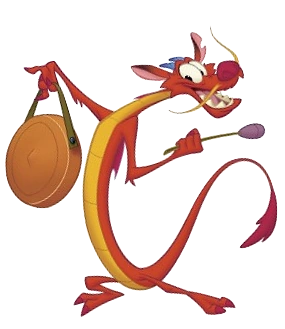
The mystery begins early in the film when Mulan, desperate to save her aging father from conscription, seeks the help of her family's ancestral guardians. It's here that the hapless mushu the dragon, a disgraced former guardian, attempts to rouse the legendary Great Stone Dragon by banging a gong with more enthusiasm than skill. But the massive stone statue remains stubbornly inanimate, leading Mushu to embark on the hero's journey himself. However, what if Mushu's failure wasn't due to his incompetence alone, but because the Great Stone Dragon had already fulfilled its duty in an unexpected way?
The Great Stone Dragon's Silence: A Deeper Meaning
The fan theory suggests that the Great Stone Dragon's spirit found its new vessel in Mulan just before mushu the dragon ever got his chance to bang the gong. The narrative provides several powerful pieces of evidence to support this:
- The Scene of Decision: When Mulan makes the momentous choice to take her father's place in the army, she is depicted sitting at the foot of the Great Stone Dragon statue. This repeated imagery visually links Mulan to the very entity meant to protect her family.
- Symbolic Lightning Strikes: As Mulan commits to her selfless act, lightning strikes dramatically illuminate the Great Stone Dragon. These aren't random occurrences; they punctuate Mulan's resolve as she takes her father’s scroll and prays to her ancestors, subtly hinting at a spiritual transference of power.
- Pervasive Dragon Imagery: The dragon symbol is deeply woven into Mulan's transformation. It's engraved on the sword she uses to cut her hair, a symbolic act of severing her traditional identity to embrace her warrior path. Even the handles of the wardrobe containing her father's armor are shaped like the dragon's head. This constant visual motif implies a powerful connection between Mulan and the family's protector.
- The Eyes of Awakening: In the ancestral temple, the eyes of the Great Stone Dragon glow, but the statue itself does not move. The theory proposes that these glowing eyes symbolize Mulan's inner spirit of protection awakening, rather than the literal stone dragon coming to life. She is becoming the protector.
According to this theory, the reason mushu the dragon couldn't wake the Great Stone Dragon is simple: its spirit was no longer there. It had already entered Mulan, making *her* the ultimate guardian and embodiment of the family's protective spirit. This perspective elevates Mulan's role beyond just a courageous warrior; she becomes the living embodiment of her family's ancient protector.
Mushu's Misadventure: Why the Gong Failed
While the Mulan-as-dragon theory is compelling, it doesn't entirely dismiss other reasons for the Great Stone Dragon's inertia. From Mushu's perspective, his attempt was a clear failure. As the audience, we see mushu the dragon’s haphazard efforts. He bangs the gong like a frantic drum, lacking any specific cadence or reverence. One explanation is simply that he was doing it wrong. Waking a creature turned to stone, especially one of such ancient power, likely isn't as simple as a loud noise. It probably requires a precise ritual, a specific "song" or intent that Mushu utterly lacked.
Furthermore, Mushu's own motivations were questionable. He wasn't genuinely invested in waking the Great Stone Dragon; his primary goal was to regain his own status as a guardian. He wanted to go on the adventure, to prove his worth, and the idea of a giant, ancient dragon overshadowing him wasn't appealing. This lack of genuine intent or selfless desire could have been another crucial reason for his failure. The Great Stone Dragon, representing pure protection, might only respond to a truly devoted heart.
It's also worth considering the humorous, if cynical, possibility that the Great Stone Dragon was simply... a stone decoration all along, and the ancestors were a bit "batshit insane" for believing it was anything more. However, the pervasive dragon symbolism throughout Mulan's journey strongly argues against such a mundane explanation. The magic in Mulan is subtle but undeniable, and the Great Stone Dragon serves a significant symbolic purpose whether awake or not. For more theories on the dragon's awakening, consider reading Why Didn't Mulan's Great Stone Dragon Wake? Multiple Theories.
Mushu the Dragon's True Destiny: Guardian by Her Side
While his initial attempt to wake the Great Stone Dragon was a bust, Mushu wasn't without purpose. In fact, his inability to rouse the ancient guardian paved the way for his own crucial role in Mulan's destiny. The theory suggests that it was fate for mushu the dragon to be the guardian who accompanied Mulan. He might not have been the mighty stone dragon, but he was exactly the guardian Mulan needed: small, witty, and fiercely loyal.
Mushu the dragon, voiced by the legendary Eddie Murphy, is a beloved character who provides much-needed comic relief and emotional support throughout Mulan's harrowing journey. Initially driven by selfish desires to reclaim his status, Mushu undergoes a significant character arc, growing to deeply care for Mulan. He supports her, advises her (often poorly, but always with good intentions), and helps her navigate the challenges of disguising herself as a man in the army. His vibrant personality, quick wit, and mischievous nature make him a standout Disney sidekick, proving that true guardianship comes not from size or ancient power, but from unwavering companionship and heart.
Both Mushu and Mulan needed to grow. Mushu needed to learn humility and true selfless service, while Mulan needed to discover her inner strength and become the hero she was destined to be. The Great Stone Dragon's refusal to wake, whether due to Mulan's absorbed spirit or Mushu's incorrect technique, created the perfect catalyst for both characters' development. Mushu's journey from disgraced family guardian to Mulan's trusted protector is a testament to his evolving character. You can delve deeper into his personal journey and redemption in Mushu's Destiny: From Disgraced Guardian to Mulan's Protector.
Unpacking the Symbolism: Mulan's Inner Dragon
The fan theory that Mulan is the Great Stone Dragon is more than just a clever explanation for a plot point; it's a powerful metaphorical interpretation that enriches the entire film. It reinforces Mulan's core journey of self-discovery and inner strength. She doesn't need an external force to protect her family; she *is* that force. This aligns perfectly with the film's themes of challenging gender norms and proving that true heroism comes from within, regardless of societal expectations.
By becoming the Great Stone Dragon, Mulan embodies the spirit of protection, bravery, and honor that her ancestors revered. Her physical form may be that of a young woman, but her spirit is that of the ultimate family guardian. This adds a profound layer to her acts of self-sacrifice, her courage on the battlefield, and her ultimate triumph in saving China and restoring honor to her family. It highlights that the most potent magic often resides not in ancient relics or mythical creatures, but in the unwavering spirit of a determined individual.
Conclusion
The theory that Mulan is the Great Stone Dragon offers a deeply resonant and emotionally satisfying explanation for one of Mulan's intriguing mysteries. It reframes mushu the dragon's initial failure not as a simple comedic beat, but as a pivotal moment that cleared the path for Mulan to fully embrace her destiny and for Mushu to find his true purpose as her indispensable companion. This perspective transforms Mulan into more than just a hero; she becomes the living embodiment of her family's legacy and a beacon of inner strength, reminding us that true power often resides within, waiting to be awakened.