The Enduring Mystery: Why Didn't the Great Stone Dragon Wake Up in Mulan?
Disney's animated classic Mulan (1998) is a timeless tale of courage, honor, and defying expectations. While Mulan's incredible journey from dutiful daughter to savior of China takes center stage, an intriguing question has long captivated fans: why did the Great Stone Dragon, the revered protector of the Fa family, remain inert when Mushu attempted to awaken it? This pivotal moment sets in motion the entire adventure, forcing a disgraced Mushu to step up as Mulan's unlikely guardian. Let's delve into the multiple theories attempting to unravel this magical mystery, exploring everything from spiritual transference to Mushu's own bumbling incompetence, and the deeper symbolic meanings that enrich the film's narrative. The role of mushu the dragon, Mulan's spirited sidekick, is central to understanding this fascinating enigma.
The Fa Family's Ancient Protector: A Symbol of Strength
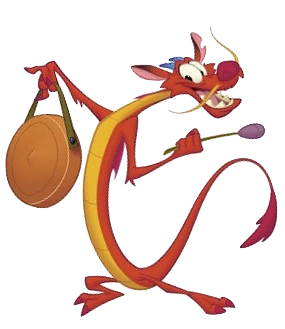
Before examining why it didn't stir, it's crucial to understand the significance of the Great Stone Dragon. This imposing statue in the Fa family temple was not merely a decorative piece; it embodied centuries of ancestral protection, a physical manifestation of the family's legacy and spiritual guardianship. Its purpose was clear: to defend the family, particularly in times of grave danger. When the Emperor's conscription order arrives, demanding Mulan's elderly father join the army, the ancestors immediately decree that the Great Stone Dragon must be awakened to guide and protect their only male descendant. The task falls to Mushu, a former guardian demoted to gong-ringer, who, in his eagerness to reclaim his status, accidentally demolishes the statue, thus setting the stage for his own, very different, form of guardianship.
Theory 1: Mulan Embodies the Dragon's Spirit
Perhaps the most compelling and widely embraced fan theory posits that the Great Stone Dragon's spirit didn't fail to awaken because it was absent, but because it had already found a new vessel: Mulan herself. The film subtly weaves in significant visual cues supporting this idea. Consider the pivotal scene where Mulan, heartbroken but resolute, sits at the foot of the Great Stone Dragon, deciding to take her father's place in the army. Throughout this sequence, and others leading up to her departure, the dragon is repeatedly in view, often accompanied by dramatic lightning strikes that seem to highlight its spiritual connection to Mulan's awakening sense of duty. The dragon is even engraved on the sword she uses to cut her hair and adorns the handles of the wardrobe holding her father's armor.
According to this theory, the dragon's spirit quietly transferred into Mulan as she embraced her destiny as the true protector of her family. When the dragon's eyes briefly glow in the temple, it isn't the stone coming to life, but a symbolic reflection of Mulan's own protective spirit igniting. Mushu, therefore, couldn't wake the dragon because its essence was no longer there to be summoned; it was already walking out the door, disguised as a man, ready to face the Huns. This interpretation adds profound depth to Mulan's journey, suggesting she doesn't just become a hero, but embodies the very spirit of her family's ancient guardian. For a deeper dive into this fascinating perspective, explore Mulan Is the Great Stone Dragon: A Fan Theory Explained.
Theory 2: Mushu's Misguided Approach and Destiny's Hand
Another popular theory suggests the problem wasn't with the Great Stone Dragon, but with mushu the dragon's method. The ancestors task Mushu with waking the dragon, and he proceeds to simply bang a large gong with gusto. But is awakening a mystical stone guardian truly that simple? Many believe there's likely a specific ritual involved: a precise cadence, perhaps a mystical "song," or a particular form of intent required to rouse such an ancient spirit. Mushu, initially motivated by self-interest and a desire to regain his status, didn't approach the task with the reverence or understanding it demanded. He just banged away, hoping for a quick fix.
This leads to a closely related idea: perhaps the Great Stone Dragon *chose* not to wake because Mushu was meant to be Mulan's true guardian. It was destiny. Mushu, despite his flaws, was the guardian Mulan truly needed – a companion who could offer both practical (if often misguided) assistance and emotional support, as well as crucial comic relief. His journey from a disgraced, self-serving figure to a loyal and brave protector mirrors Mulan's own growth. The stone dragon's non-awakening created a void that Mushu was compelled to fill, allowing him to prove his worth and truly fulfill his purpose, albeit in an unconventional way. His initial failure thus became a catalyst for his ultimate redemption and a crucial part of Mulan's success. To understand more about his unique path, delve into Mushu's Destiny: From Disgraced Guardian to Mulan's Protector.
Other Compelling Theories: From Skepticism to Symbolic Growth
While the Mulan-as-dragon and Mushu's-destiny theories hold significant weight, other possibilities offer different angles to this enduring mystery:
- The Dragon Was Just Stone: A more pragmatic, albeit less magical, theory suggests the Great Stone Dragon was, well, just a stone. Perhaps the ancestors, in their long-held traditions and beliefs, were misguided, holding onto a superstition that the statue was more than a decorative symbol. In this view, Mushu couldn't wake it because there was nothing spiritual or magical to awaken in the first place. It’s a cynical take, but one that highlights the contrast between ancient beliefs and the reality of the situation.
- A Lesson in Growth for Both Guardians: Some believe the Great Stone Dragon deliberately chose not to awaken to facilitate the personal growth of both Mulan and mushu the dragon. Had the ancient dragon woken and guided Mulan, her journey might have been too easy, depriving her of the challenges that forged her into a true hero. Similarly, Mushu needed to navigate the world and Mulan's crisis on his own terms to truly earn his redemption and prove his capability as a guardian. The silence of the stone dragon, in this sense, was an act of benevolent non-intervention, pushing its successors to discover their own strengths.
- The Rules of Ancient Magic: It's also possible that the magic governing the Great Stone Dragon had specific, perhaps unknown, conditions for its awakening. Maybe only a truly pure heart, or a specific descendant, or an entirely different lineage could rouse it. Mushu, with his tarnished past and initial self-serving motives, might simply not have met the ancient magical criteria, regardless of his methods.
The persistent question of why the Great Stone Dragon remained inanimate adds a layer of depth and intrigue to Mulan's already rich narrative. Whether it was Mulan's own spirit embodying the dragon, Mushu's bungled attempt, or a grander plan unfolding through destiny, the mystery ultimately served a crucial purpose. It forced Mulan to rely on her inner strength and allowed mushu the dragon to step into his true, albeit unexpected, role as her devoted protector. The magic of Mulan lies not just in its epic adventure, but in the questions it inspires, allowing fans to endlessly ponder the deeper meanings behind its beloved characters and pivotal moments.